A map in the style of your game, with buildings you click on, a HUD with your player's numbers and windows that work on every device. For a game that is already live, or one that has yet to launch.
0buildings in Crime Club, each with its own part of the game
0maps for Lord of the Lands: camp, city and wilds
0screen sizes every city is tested on
0game rules you have to rewrite
A new player opens your game and sees twenty links stacked on top of each other. Crime, garage, casino, bank. Where do you start? Most players don't search for long. They click away.
They get it at a glance
The casino is where you expect it, and so is the jail. Know the city and you know the game.
They go exploring
A city invites you to look around. A menu invites you to scroll, and then to leave.
Your game looks new
The same game rules and the same code, with a world that looks like it came out last year.
The ground
First streets, squares and water.
Together we choose the era, the place and the light. Then I draw the ground, with an empty plot for every part of your game.
The buildings
Every building gets its place.
The market, the barracks, the palace. Every building goes into its own plot, with the right angle and shadow, so it looks like it was always there.
HUD
Then it becomes a game.
Money, energy, tasks and notifications, in the style of your game. Every building gets a sign and opens a window with the page you already had.
Mobile
And it works everywhere.
On mobile the map gets its own crop and windows slide up from the bottom. Portrait and landscape, tested on eleven screen sizes.
Three cities
Every game its own world.
No template with a different colour. Every city starts from the mood of the game.
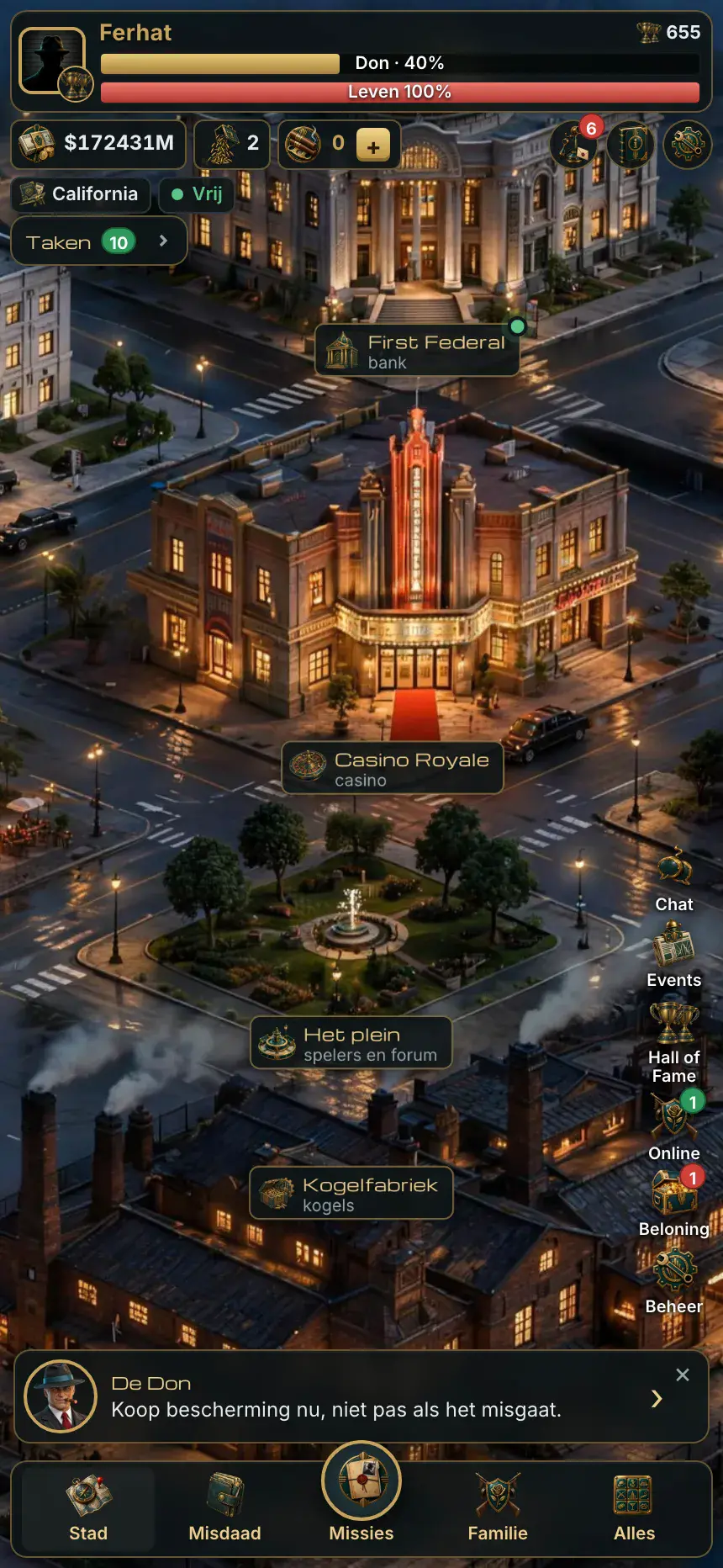
Crime Club
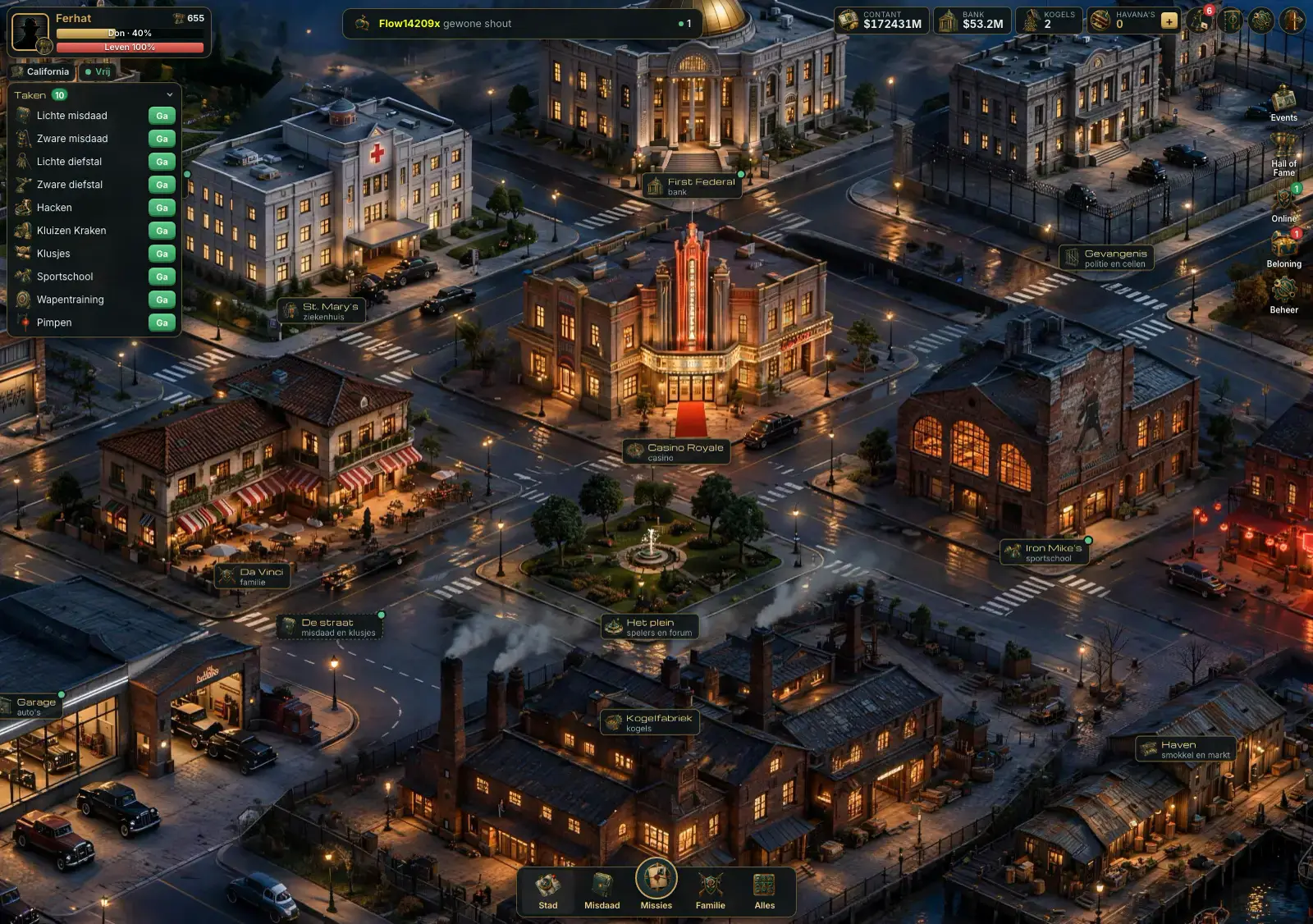
Mafia, the thirties, rain on the cobblestones.
Thirteen buildings in a city at dusk. Smoke from the factory, light in the casino, water in the harbour. Every building opens part of the game, and anyone who wants to keep the old menu keeps it.
Dusk13 buildingsMoving cityClassic or city
Ottomaan
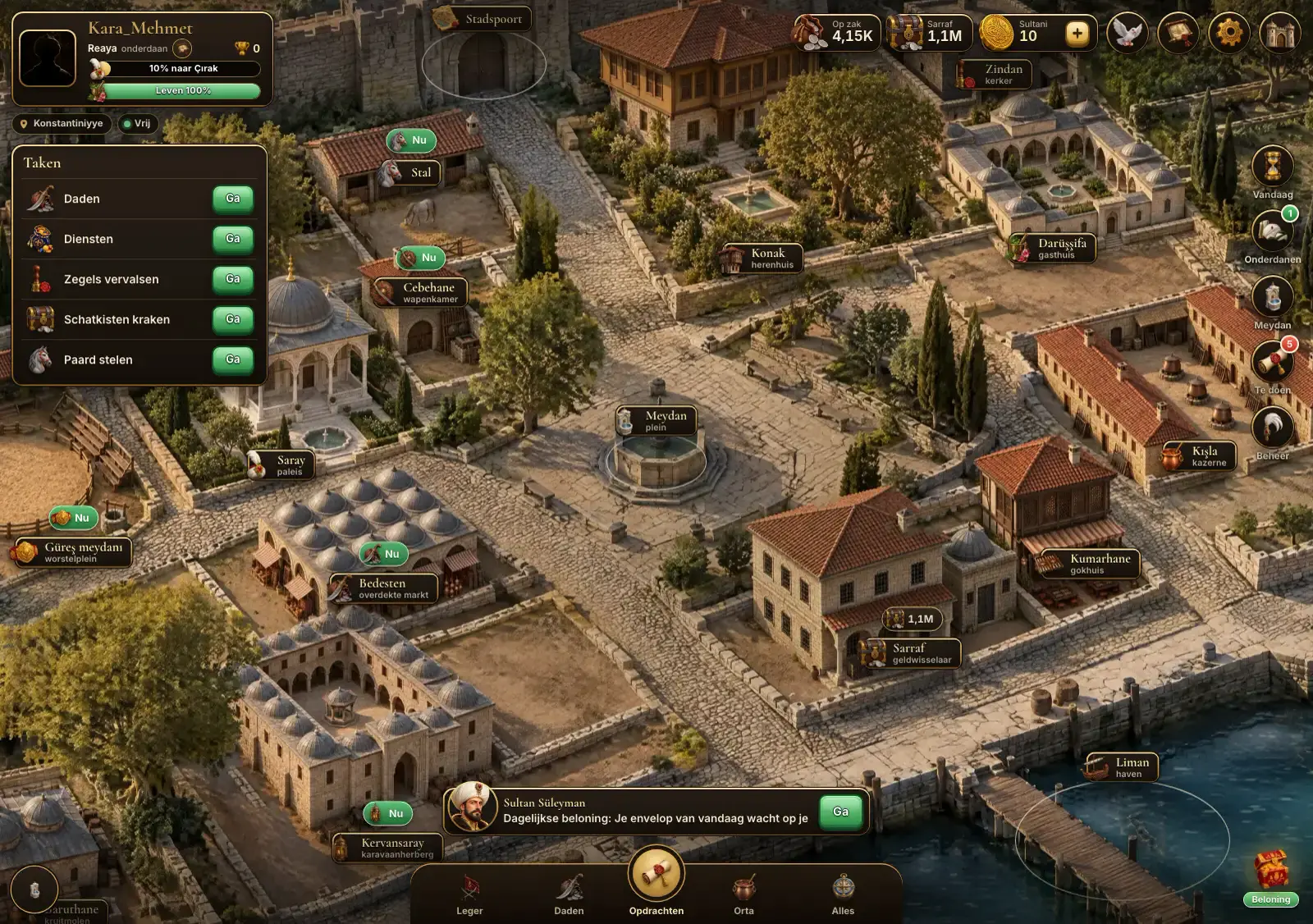
An Ottoman harbour town, building by building.
First empty plots, then every building placed in on its own: the bazaar, the stable, the barracks, the palace. Tasks in the corner, a ring of choices around every building and a daily reward that gives players a reason to come back every day.
Sunset13 buildingsRing of choicesFive languages
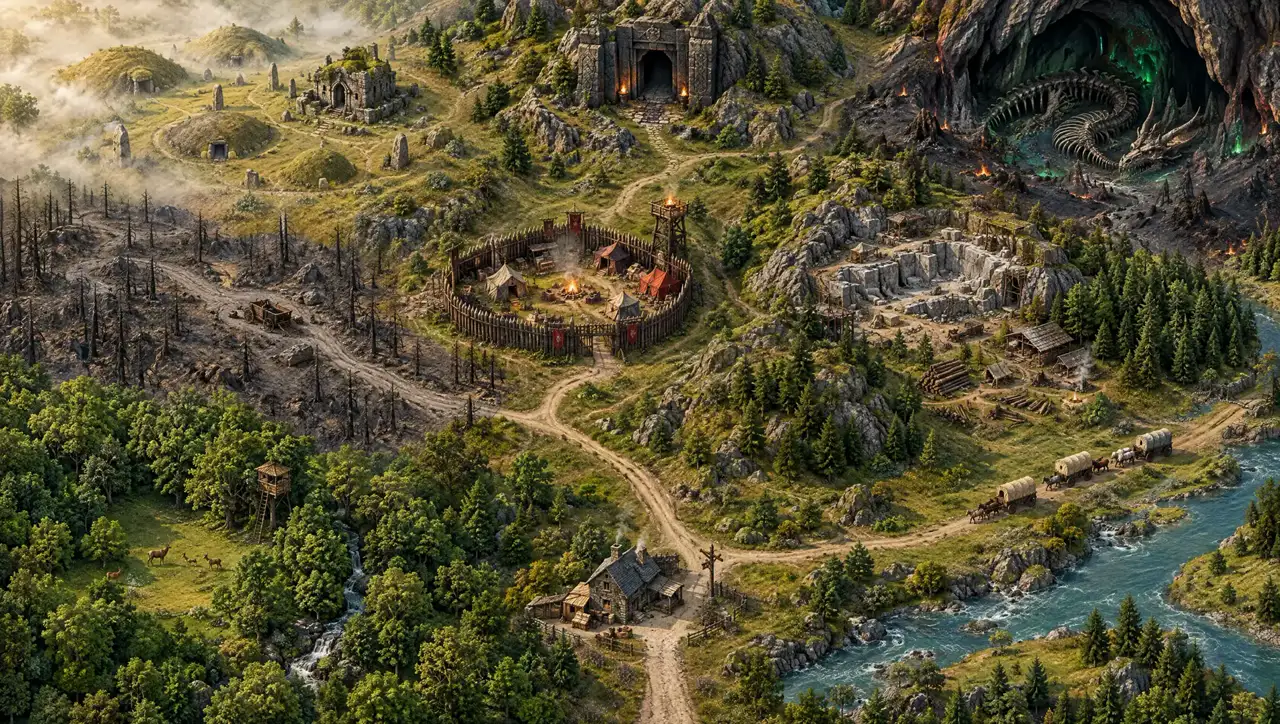
Lord of the Lands
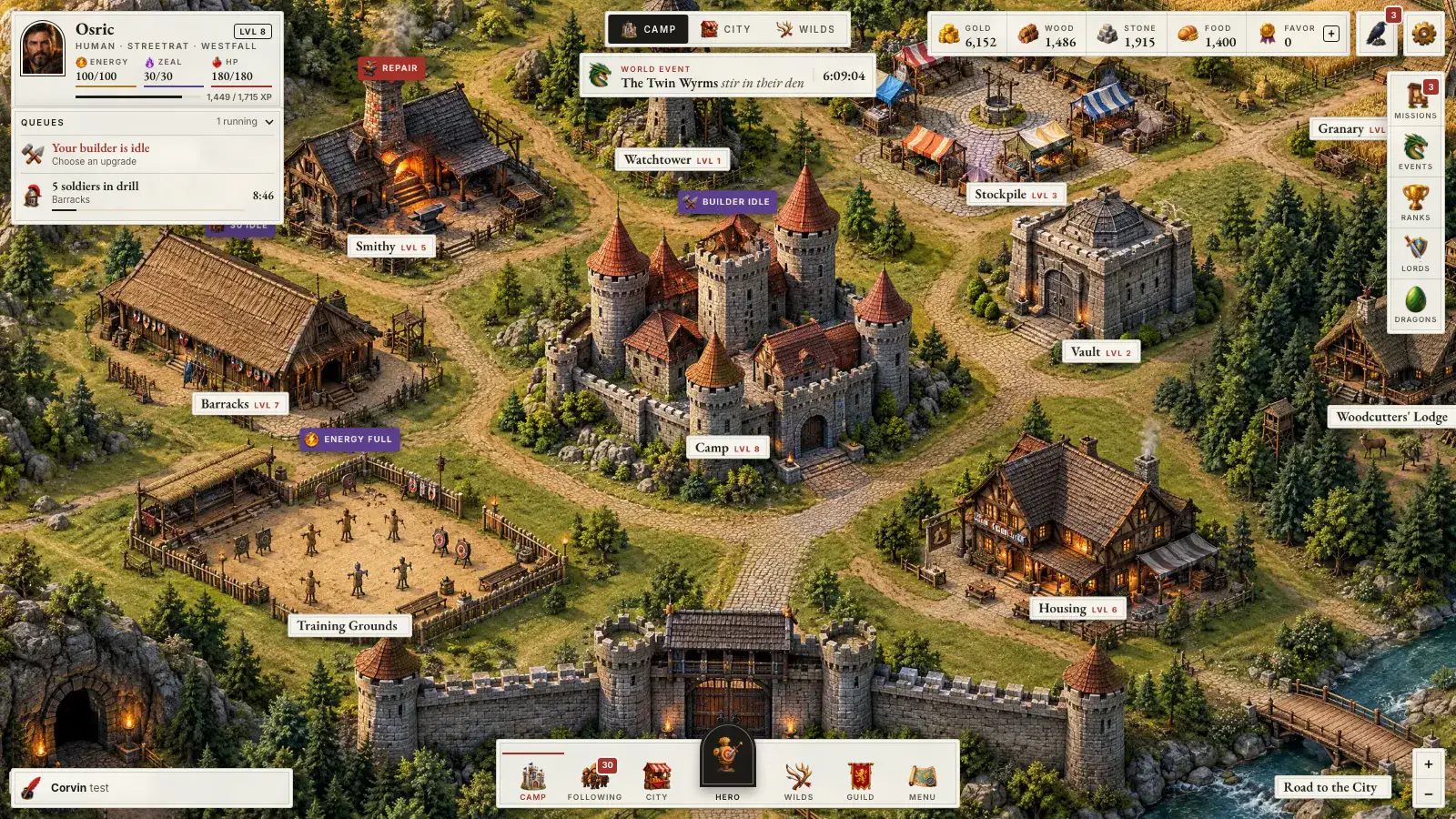
Three maps for a medieval world.
A camp, a city and the wilds, in the game's own house style: ivory, ink and crimson. Resources at the top, queues on the left and a world event counting down.
Three mapsOwn house styleQueuesWorld events
What you get
Not a picture. A city that works.
Every building opens your game
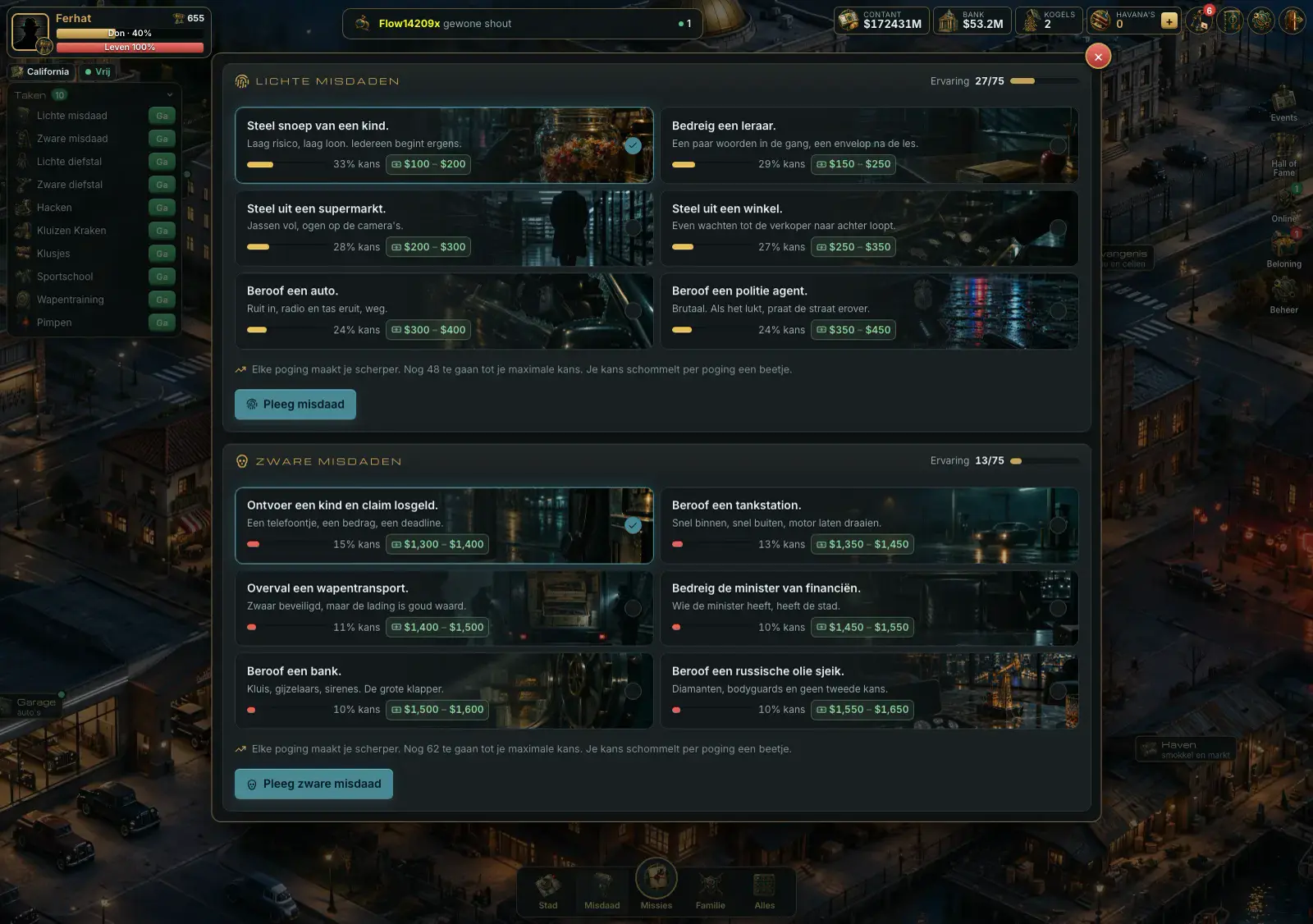
A click on the casino opens your casino page, as a window above the map. The pages you already had simply keep working.
Made for mobile
Its own crop, a compact HUD and windows that slide up from the bottom. Portrait and landscape.
Clickable to the pixel
Every building gets its real outline. No invisible rectangle that clicks next to it.
Your style, not mine
Lord of the Lands got ivory, ink and crimson from its own house style. Crime Club got copper and evening light. Your city belongs to your game, not to my portfolio.
No risk
Your players choose.
Crime Club ran for years with a classic menu. Now every player chooses: the menu or the city. Nobody loses anything, and new players see the world straight away.
ClassicCity
Pricing
Choose how much you do yourself.
You pay once, a fixed price you know up front. No subscription, no hourly billing.
Design
For those who build themselves or have their own developer.
from€200
A city map in the style of your game
A building for every part of your game
Design of the HUD and windows, for desktop and mobile
The map in 4K, plus its own crop for mobile
The outline of every building, ready to be made clickable
Moving water, smoke and light, a second map or a custom icon set come as extras in your quote. Starting prices, excluding VAT.
Questions
What game owners ask.
Do I have to rewrite my game?
No. Your game rules and pages stay as they are. The city is a new layer on top: a click on a building opens the page you already had, as a window. That is how it went with Crime Club too.
My players are used to the menu. Won't they drop off?
That is why I build in a choice: the classic menu or the city. Whoever wants to keep the menu keeps the menu. New players see the city straight away.
Does it work on mobile?
Yes. On mobile the map gets its own crop, the HUD becomes more compact and windows slide up from the bottom. I test portrait and landscape, on eleven screen sizes.
My game doesn't run on PHP.
The city itself is HTML, CSS and JavaScript, so it fits into almost any system. Before building it in, I look at your code first, and you hear up front whether it works and what it costs.
My game doesn't exist yet.
Then start with the design. You immediately know what your world looks like and which parts your game needs, and you build everything around it.
How do you make the images?
With image generation, and then by hand. Every building is checked and touched up separately: streets running into the water, seams in the road, shadows falling the wrong way. Only when everything is right does it go into your game.
Why does it say "from"?
A small city with six buildings is something else than three maps with thirty. Your quote has a fixed price, before you pay anything.
Your city
Give your players a place to come back to.
Tell me which game you have and what mood you're after. You get an answer within one working day, followed by a proposal with a fixed price.